
The Sound From Outside the House
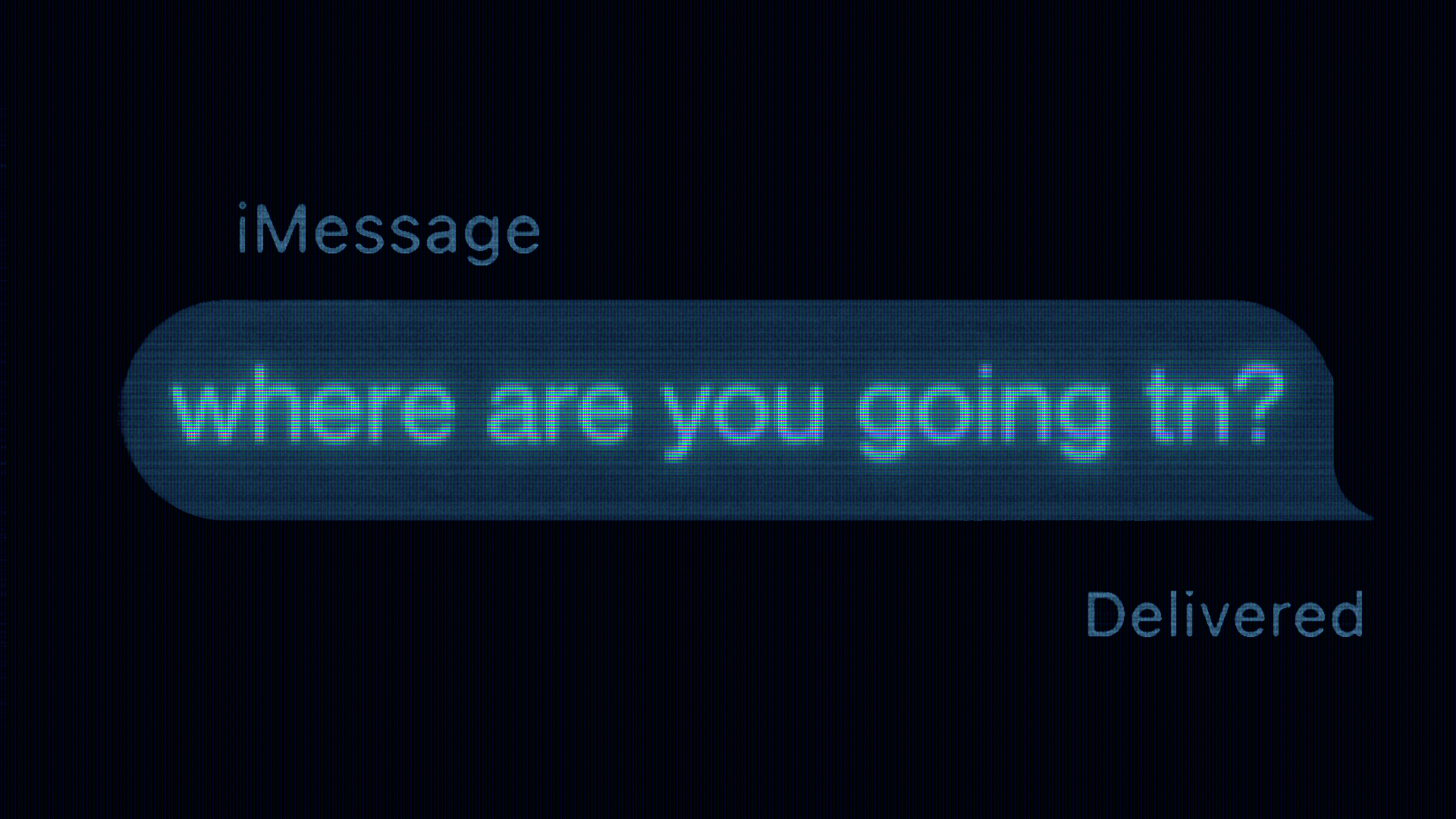
Illustration by Ava Tichenor
“Where are you going tonight?” I sent it as a text.
It was 2019, and I had the ambition of being a contemporary club kid. It wasn’t a career I wanted to pursue, but it was the atmosphere of New York: the residue of Studio 54 and the Palladium—clubs whose doors had long since shuttered by the time I could have wrestled my way to the front of the line—carried forward into House of Yes.
I was at the peak of what felt like some sort of homosexual beauty standard—but, in the end, I wanted to forget myself and escape into a bit of music and experience strobing, theatrical lights and sweaty bodies pulsating against me. Every night felt like, “hey, you’re only going to be twenty-two once.” And, yes, I was only twenty-two once.
But, then, 2020 rolled around and showed me, “oh, you’re not going to that one club anymore.”
From the days of dreaming up the next dance floor to curating the next best Spotify playlist, I retreated, as all of us were required, to a safer space—one where bright lights and sonic landscapes could still accompany one another. The magic of a club night was connecting with one another over a shared music taste, and the new friends met through organic means. As my club days faded into memory, my memories themselves distorted, a little more with each passing year. Then, recently, they started to echo on TikTok. A creator tagged a video #outsiderhouse, and I fell down a rabbit-hole of visuals paired with a sound I can only describe as my own club memories, played back at a lower resolution.
Here is the sound, as far as it can be put into words. House music made to sound broken: four-on-the-floor drums under tape hiss and bitcrush, the mix pushed into distortion on purpose, built on samples of the dance-pop that was playing at parties in the 2000s, when most of the people now making it were children, too young to have been in the room that was playing them. On TikTok, it appears in fifteen-second clips, paired with footage that matches: VHS tape, old commercials, night drives through wet cities.
The genre’s name itself is secondhand. “Outsider house” first circulated in the early 2010s when a Brooklyn-centered wave of rough, hardware-jammed house gathered around the L.I.E.S. label; The Guardian was already complaining about the term by 2013. That scene thinned into the lo-fi house of DJ Seinfeld and DJ Boring and faded around 2017.
The TikTok wave reclaimed the name and attached it to something darker and more sentimental, and the track everyone cites predates the trend: Cult Member’s “U Weren’t Here I Really Miss You,” released in 2019, lifts its hook from Mia Martina’s 2010 dance-pop single “Latin Moon” and degrades it until it sounds like a party heard from the parking lot. It went viral on TikTok years after its original release. GLM-RST, one of three of the genre’s producers I interviewed, credits it, along with Cult Member’s “three,” with kicking off the popularization of outsider house as a genre.
The three producers I spoke to all uphold the “outsider house” name, each for different reasons. Vanta, the newest of the three to the scene, likes it because the music fits nowhere else:
I think that’s a good name for that type of music because in my opinion it doesn’t fit like in any mainstream genre that has been active over past years, everything about this music is so strange for people that just heard it - it has that gritty, almost broken sound and at the same time it’s like so understandable because many people have associations with this kind of music that comes from their childhood … and i think that’s why it’s called “outsider house” because idea of that genre is that on paper it doesn’t fit in any modern kind of sound.
GLM-RST reads the label as a filter:
Outsider house, for me, is more than just music. Regular house is more about parties and energy, but outsider house is like a warm blanket, like a night drive through a rainy city. I think the genre has the perfect name: this music isn’t for everyone.
For me, the outsider house ethos comes back to the physical experience of being “outside the house”: hearing something while waiting in line to get inside, the music growing louder the closer you get to the door.
Whatever the name means, the room it happened in is TikTok. As Atlanta-based producer Sxnctuary put it:
I’d say that this is one of the rare instances where short form content has added to the art form rather than taken from it. Pairing visuals with music is a great way to express what the track means to you. Witnessing so many different aesthetics and art forms align themselves with the genre is amazing to see. It showcases all of the different ways people are interpreting the sound and how it makes them feel. It gives me a positive outlook of what short form content can bring to music moving forward.
One of my favorite tracks by Sxnctuary is “For You,” which is, I imagine, titled in reference to TikTok’s own “For You” page, where an endless scroll of content algorithmically produces something specifically for you. Other creators on the app can then take the track and pair it with visuals of their own, and a community forms between the person who made the music and the people who made the pictures, with nobody commissioning anybody.
Vanta goes further:
I think TikTok is one of the most important things - if not THE most important for this genre because first of all it allows artists to unite and lets them connect so more incredible people means more incredible music. I was making other types of music before and I’ve never seen people so kind and most importantly creative like in this scene and also i think why TikTok is so great is that simplicity in networking and communication with your fans and also with other artists.
GLM-RST sees both sides:
On one hand, it’s a great place to promote your work without spending money. On the other, a musician has to turn into a content creator just to get their music heard. But I don’t think it’s fair to blame TikTok itself. Times have changed, and whether it’s for better or worse is for people to judge.
The disagreement starts when you ask where the music is supposed to be heard. GLM-RST can’t picture it in a club at all:
Honestly, it’s hard for me to imagine outsider house in a club. The genre usually has heavy distortion and intentionally low sound quality. I see it more as the night ride home after a party or a club, when you need to unload your brain, rest and daydream.
Vanta, on the other hand, can:
I think the club is the way hahaha, but i think people listen to this kind of music when they’re feeling low or need a little bit of help because it can help hype them up when they’re alone, it’s the beauty of this genre, i think - you can listen and admire this at the very different time of your life and it will always hit
Though these two perspectives seem, at first, to contradict one another, looking at them side-by-side, there’s more agreement here than it may initially seem. The club is the reference, not necessarily the venue. This is club music for people who aren’t in the club—the ride home, the room alone—which is what it was for me in 2020, and what it now is for a generation that was in elementary school when the records it samples were new.
Combined with samples of songs from the early 2000s, there’s a haunted quality to the subgenre. Vaporwave did the same thing in the early 2010s with the 80s and 90s, slowing down corporate and mall music until it felt like the memory of a place that never existed.
Outsider house performs the same operation on the subsequent decade, as the visuals that typically accompany the tracks illustrate. Per Vanta:
All my visuals i’m making myself and I think that this genre is defined by gritty videos, like old commercials from the 2000’s, some vhs tapes and that kind of a thing, mostly because it perfectly matches kind of sound we were talking about that dark, nostalgic and almost “broken” kind of sound.
GLM-RST makes their own too, and has settled on one recurring image: eyes, on nearly every cover, because the idea that “eyes never lie,” he says, is stuck in his head. Why, exactly, the sound reads as memory is a question they can’t answer:
A small observation: it’s still a mystery to me why outsider house reminds us so much of the past. Sure, you could say, “Well, the tracks are deliberately made in a lofi style with bitcrushing and distortion,” but that doesn’t work for just any genre. Maybe it’s a bigger question about music in general: why do plain sound waves make us feel such a range of emotions?
The sound has already been bought once. GLM-RST’s “still love you,” released in August, became the soundtrack to a Children of Khan t-shirt campaign (the “You met me at a very Chinese time in my life” tee, pushed by the creator Luca Maxim), and it went viral the way these things go viral now: videos that used the song got the campaign’s meme pasted into their comments, as if the music belonged to the shirt. Sonic branding got there fast. GLM-RST, for their part, thinks the speed is the problem:
I think the era of fast content will collapse at some point. Fast content plus AI is an explosive mix that opens the door to quickly made, low-quality art. At some point there will be so much content that people will struggle to find real creativity. And then a new renaissance will come. It’ll be really interesting to watch it happen and be part of it.
Sxnctuary’s hope for five years out provides a counterweight:
In five years time, I’d like to be able to look back and say that the moving forces of this genre stayed in the hands of independent labels and artists. I feel that a lot of the reason that people resonate so heavily with the genre is because of the amount of creative control the artist and content creators have. Making something you love as opposed to making something you think someone else will love are very different.
GLM-RST, less sure, puts the other outcome plainly: there is a good chance outsider house goes mainstream, fades, and turns into “a track conveyor belt.”
I had the same question. Twenty years from now, will another generation revive this one? The sample chain is already three degrees deep: a 2010 pop song became a 2019 Cult Member track, which has since been sampled by new producers who very well may have never heard Mia Martina. When samples come from samples, and the new piece no longer resembles the original, where does the authorship sit, and at what point does something new emerge? This subgenre feels like a direct enactment of Jean Baudrillard’s Simulacra and Simulation: soon enough the copies won’t reflect an original.
Which brings me back to the text I sent in 2019. Nobody is going anywhere tonight. The music is for the ride home.
Listen to the full outsider house playlist here.