
Sylva Dean and Me
Courtesy of Ventiko
This piece appears in Issue 01: Lore, Factory Settings’ first print issue, published October 2026.
In 2010, when my mother developed breast cancer, I began gathering discarded milk cartons from Bushwick United Nursery School, around the corner from my home. The process of collecting, washing, drilling, and stitching them onto robes became an active meditation on mother’s milk, the safety of food, the waste we leave behind, and life cycles. Those robes were a vehicle for healing and my first wearable sculptures. From them, Sylva Dean and Me emerged over time, each character carrying a different relationship to protection, identity, vulnerability, and transformation.

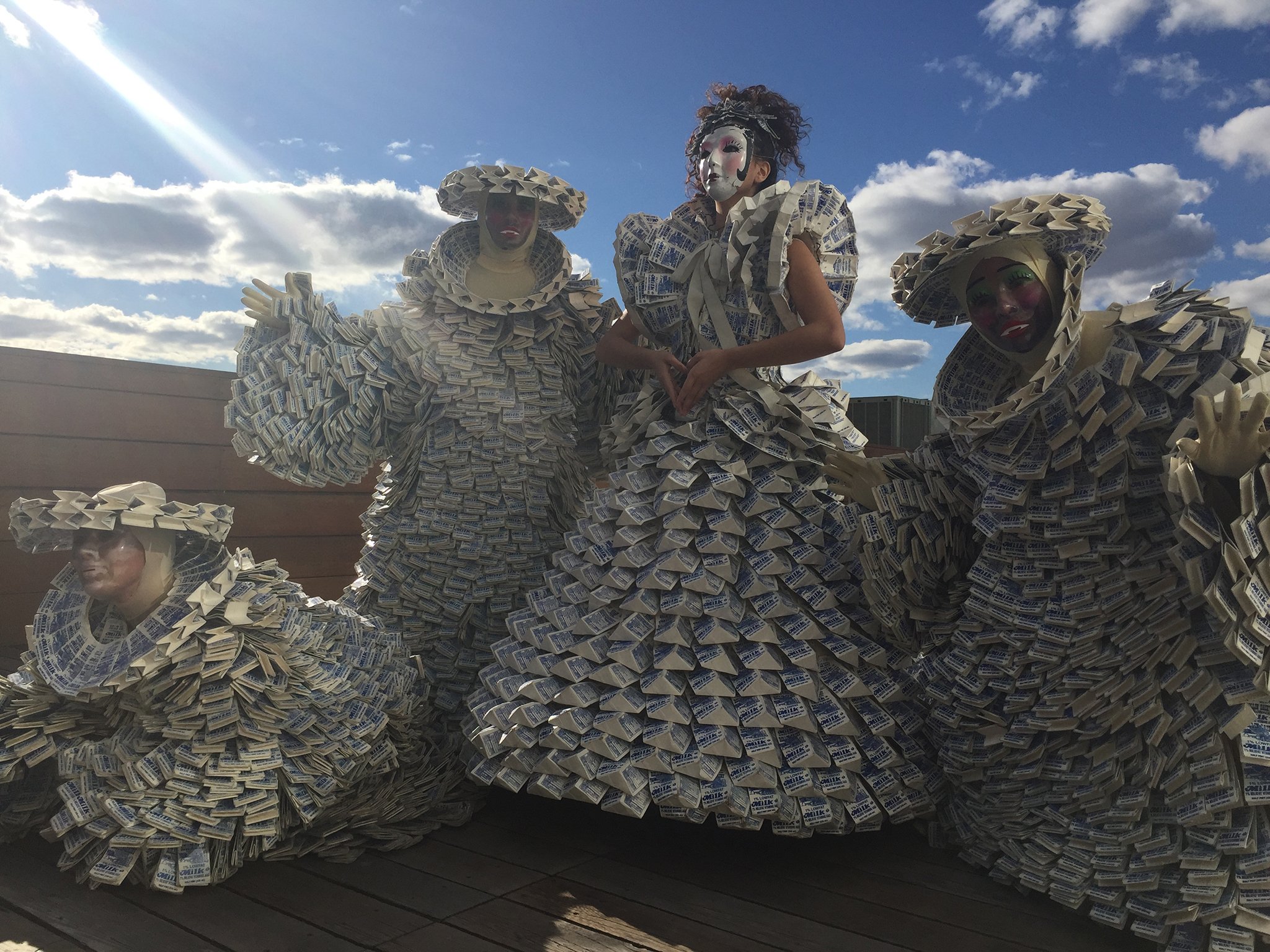
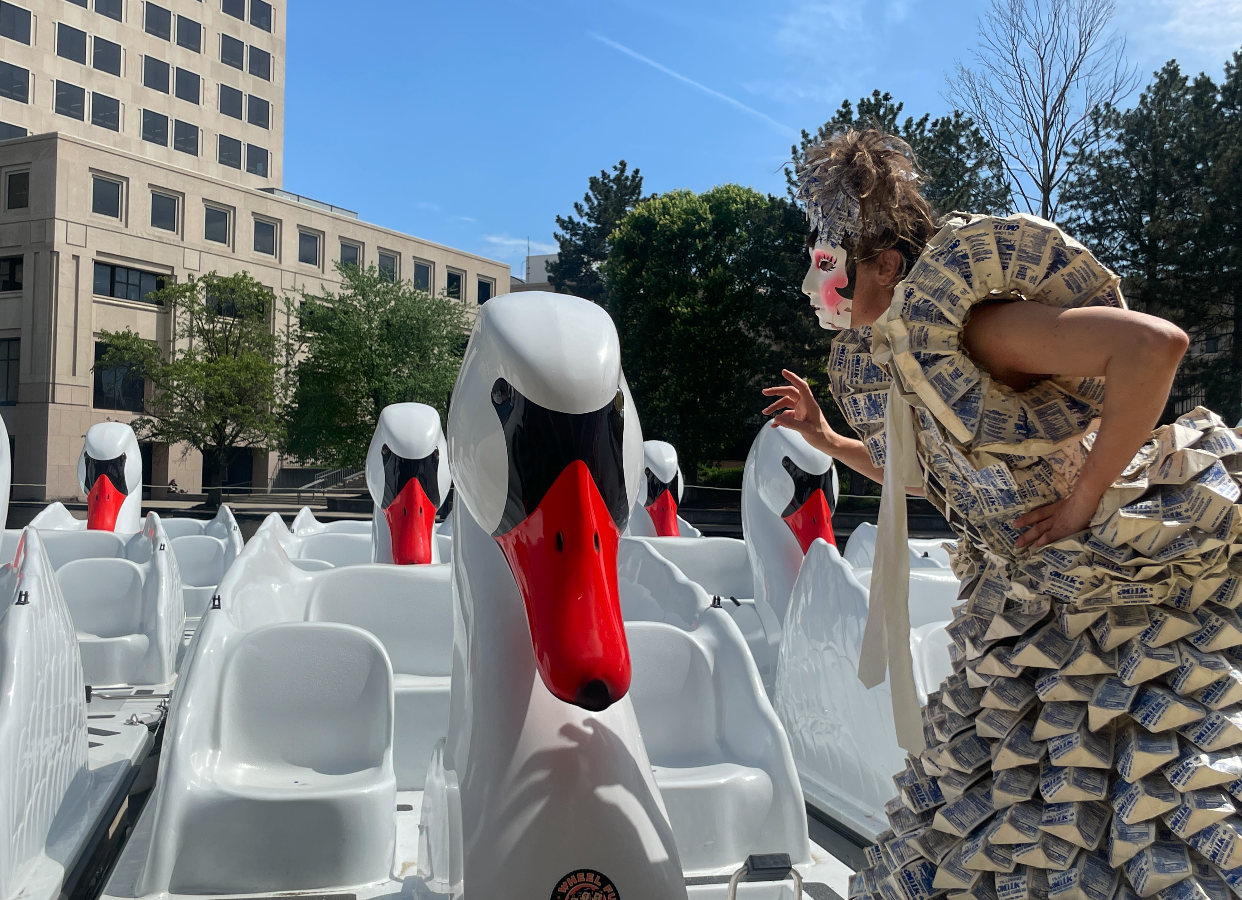
The Guardians came first: three silent, masked, androgynous figures encased in armor made from overlapping scales of milk cartons. Crowned with halos and framed by imposing collars, they are regal and formidable. Their translucent masks hold fixed, perfectly made-up expressions, yet the performers’ faces remain visible beneath them. Painted femininity overlays a living face whose expression cannot be fully read, unsettling the distinction between surface and self.
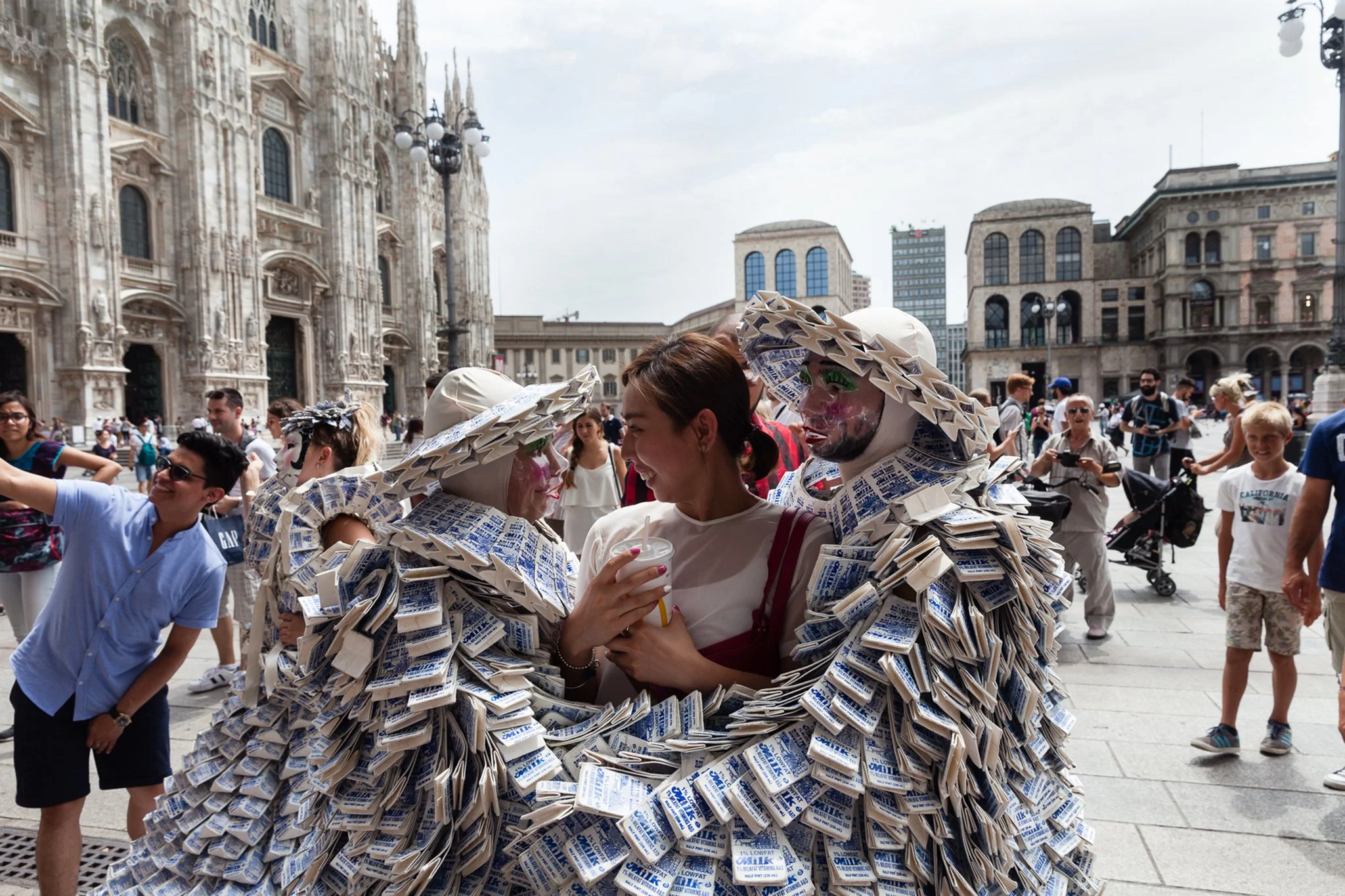
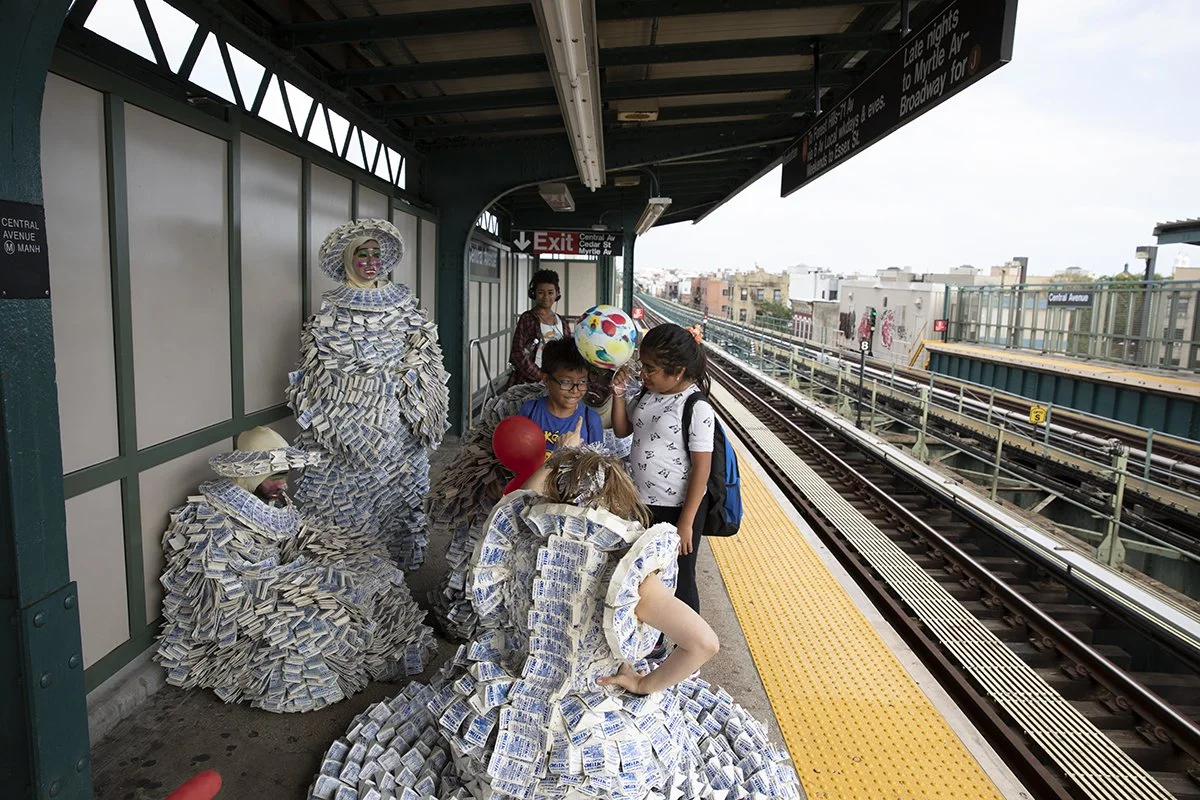
The Guardians protect Sylva Dean like a mother wrapping around her child. They move slowly through public space, swaying, rising, and falling, sometimes settling into still, rock-like forms before returning to fluid motion. Their cartons expand and contract like accordion bellows, creating a soft percussive rhythm. They orbit strangers and invite them into the procession.

Courtesy of Ventiko
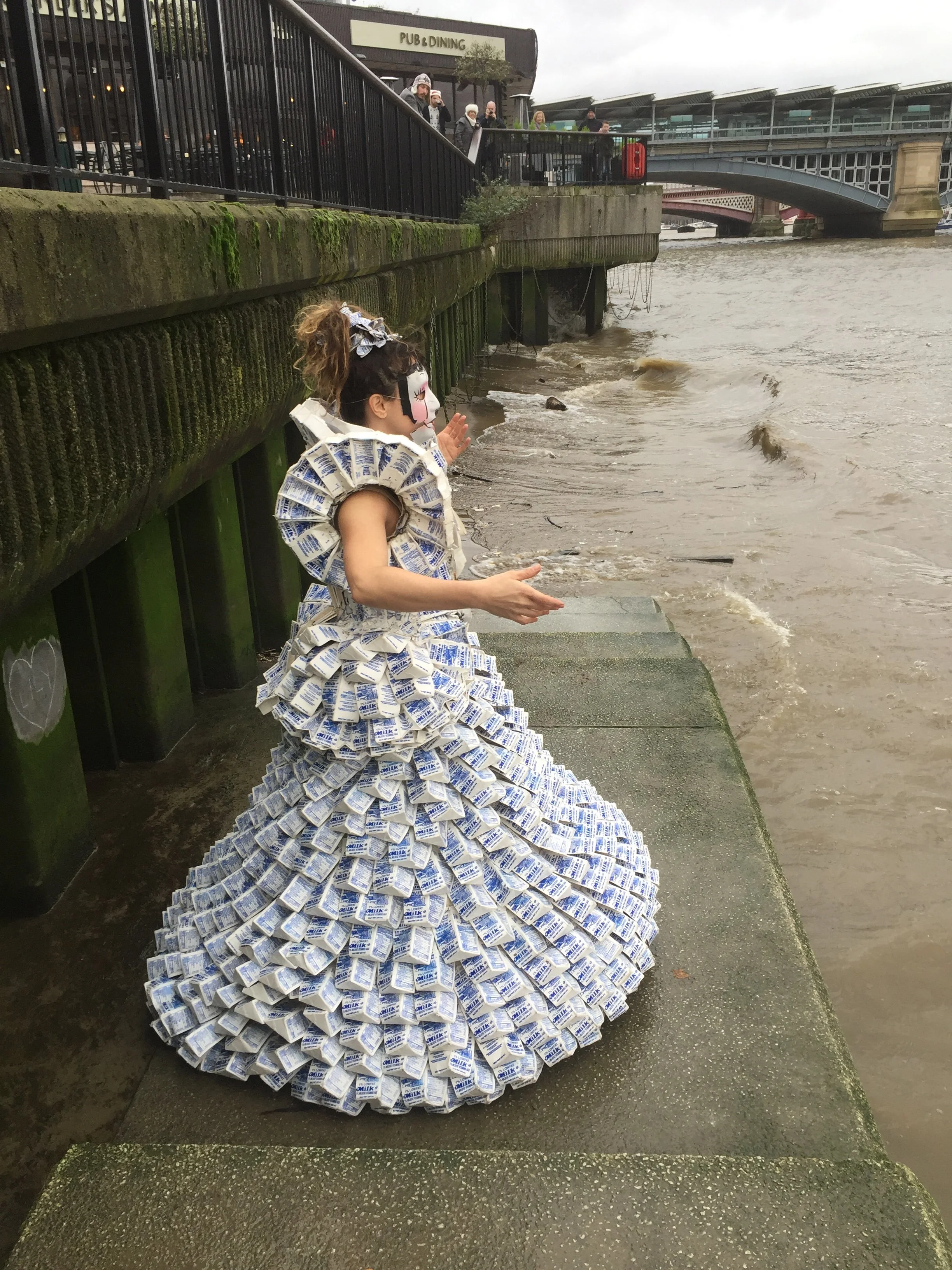
Sylva Dean came next. She is my inner child made manifest. In her earliest form, she wore milk-carton panties and a breastplate: a broken doll who could not stand on her own. Her ballgown came later, assembled from cartons the nursery school children washed themselves. A vintage wire dress form anchors its bodice, preventing her from bending and holding her within a rigid performance of femininity. Her hand-painted mask is cracked and broken, presenting an idealized face that betrays its own fragility.
Barefoot and earthbound, Sylva Dean moves as if through molasses. Her gestures are deliberate and sparse: hands resting on her hips, or one arm raised with a single finger pointing skyward. When she encounters a stranger, she places a hand on their heart and invites them to place one on hers. She touches their face, and they touch her mask. They hold each other’s gaze and sway silently together.
Courtesy of Ventiko
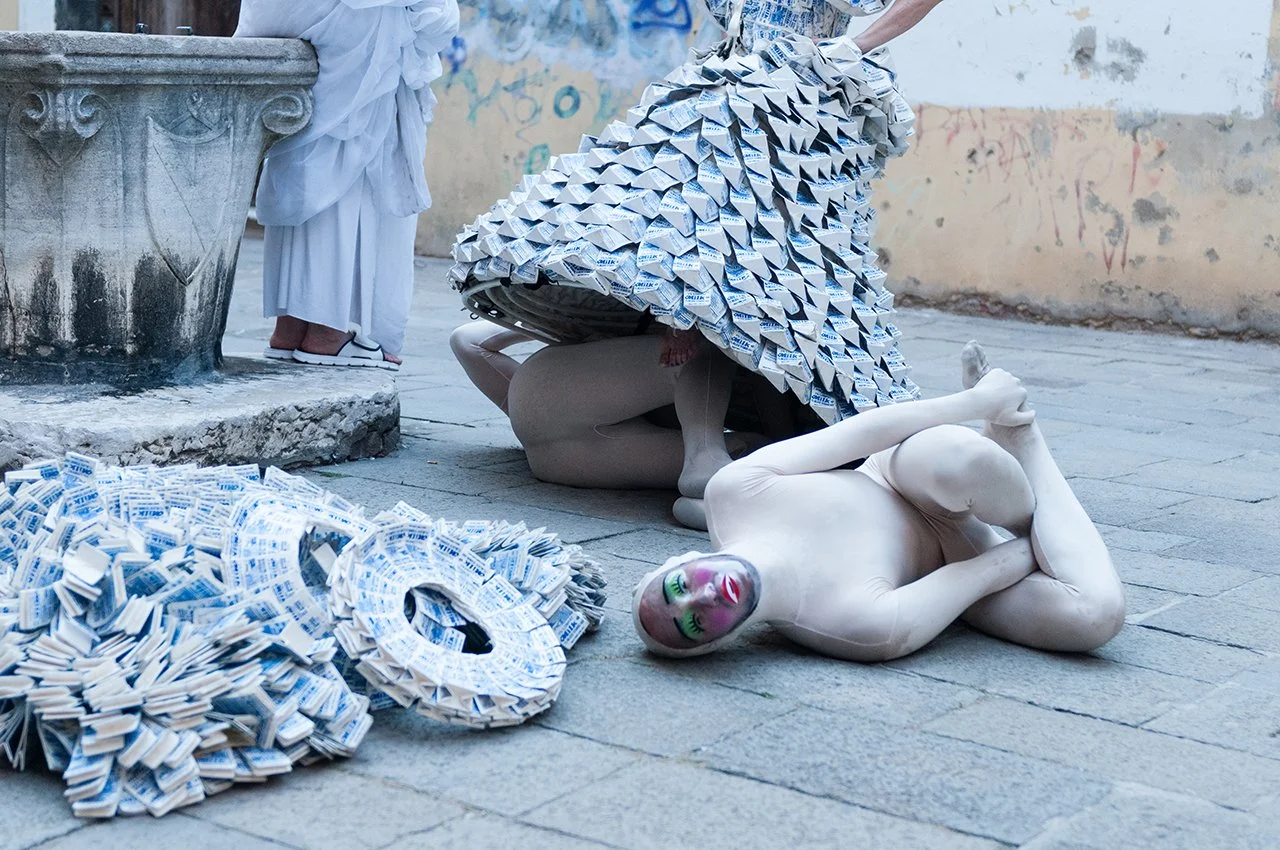
The Guardians also carry the possibility of another life. During the procession, they shed their armor in acts of public transformation, giving birth to themselves as Worms. These playful figures in flesh suits are like newborns, encountering the world before identity, rules, or boundaries have taken shape. They move through contact improvisation, guided by curiosity, touch, and an openness to connection. The transformation from Guardian to Worm carries the life cycle within the work, moving from containment and protection into exposure and play.

Courtesy of Ventiko
The Palmist is the newest character. Its shroud of more than 400 milk jugs represents the false security of self-medicating. Beneath it is the Oracle, whose wearable sculpture is also made from milk jugs. When the shroud comes off, she is exposed, and the vulnerability of new sobriety makes her scream.
For much of its life, Sylva Dean and Me has unfolded through silence. Masked performers communicate through gesture, sustained eye contact, and the wearable sculptures themselves. Their identities are obscured, and ordinary conversation gives way to encounters that require time and attention. The sculptures become instruments as well as bodies, sounding with each movement.
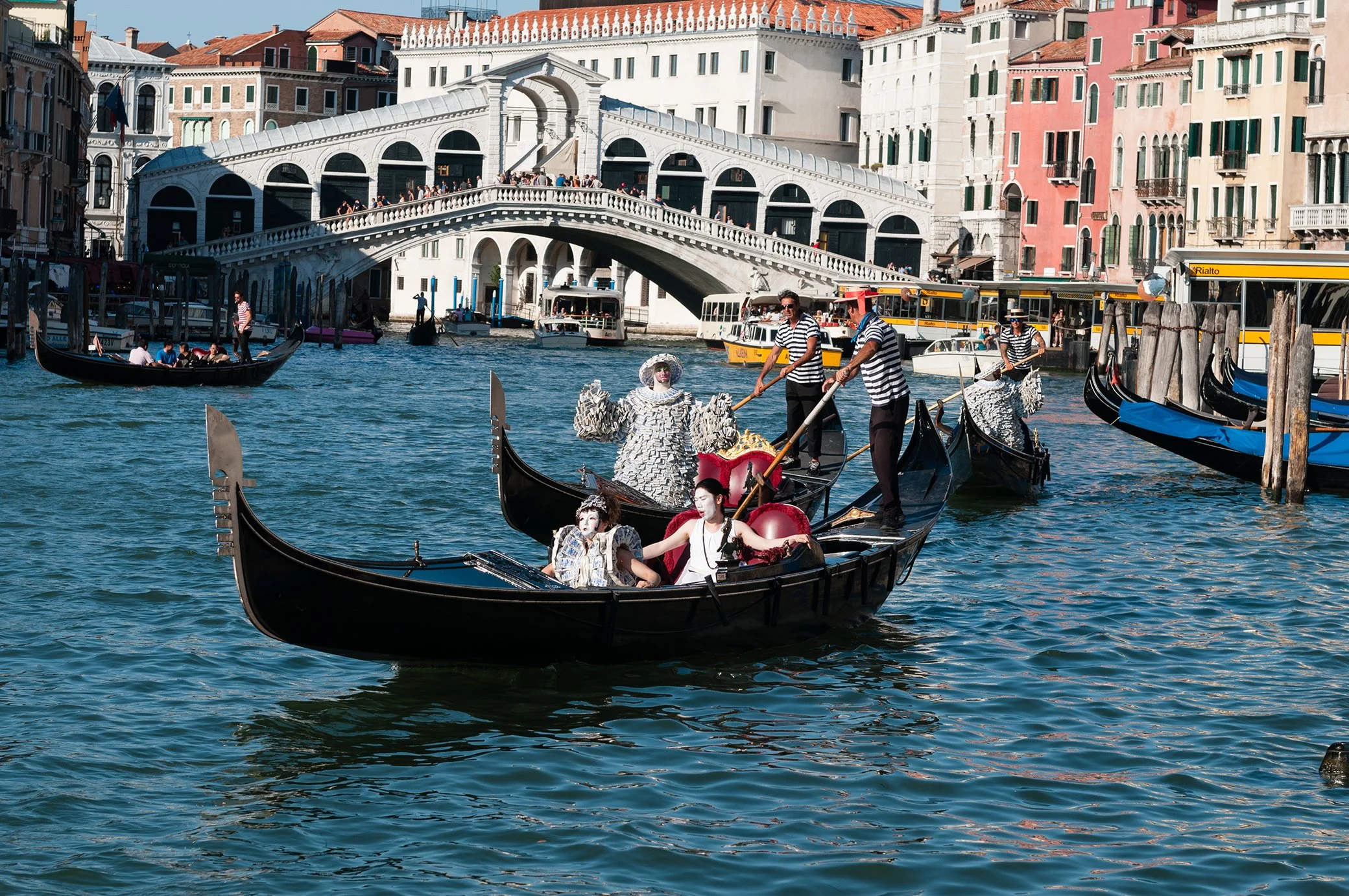
I began by walking barefoot through public space for one to seven hours at a time. Since then, the work has moved through the streets of New York, New Jersey, Belgrade, and the Dominican Republic; intervened in the Tate in London; toured Bari, Milan, and Venice; performed at the Queens Museum; and returned home to Indianapolis. In 2024, in Nervosity, the characters used their voices for the first time.
Together, these figures form an evolving ceremonial world. Constructed from thousands of discarded milk cartons and milk jugs, they carry maternal care, performed identity, recovery, and the life cycle into the public sphere. Their durational processions interrupt the pace of daily life, drawing strangers into spontaneous moments of curiosity, joy, and togetherness. Each encounter becomes part of the work, shaped by whomever pauses, meets a gaze, or joins the procession.



Ventiko is a Los Angeles-based artist and founder of Animamus Art Salon. Read more about Ventiko and her work here.