
How To Build a Mythology
Ten Principles for Coding Mythos Into the Matrix
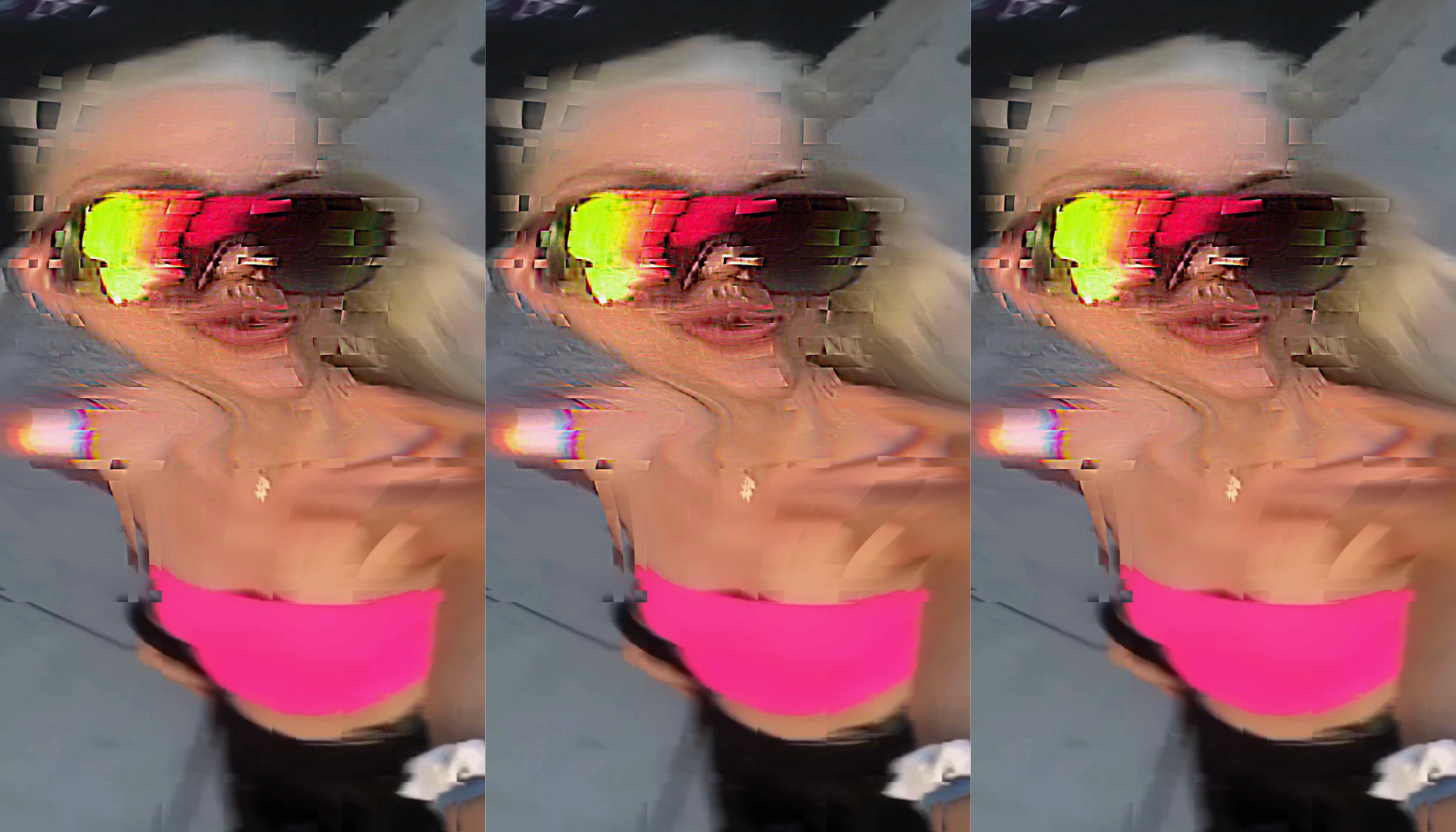
Courtesy of Signe Pierce
A version of this piece first appeared in Issue 01: Lore, Factory Settings’ first print issue, published October 2026.
We are currently living in a time of memetic hyperreality, wherein the vast expanse of what we see and perceive happens inside of our homes, from inside of our phones. Consciousness is evolving at a rapid pace through the sharing of information on social media + online life. Every day, perhaps multiple times a day, your mind can be blown by some new ___ that flashes across your retinas from your fellow “creators.”
Because of this paradigm-ripping technological shift, we find ourselves enabled to shape and structure human experience into larger-than-life media plots via the creative utilization of our wildest imaginations—without even having to leave our caves. We can reach millions of people in the tap of a ‘Share’ button. However, this concept is nothing new, as the cultivation and preservation of myth is one of the longest traditions of humanity.
Myth is mankind’s original technology for expression of meaning: a symbolic language through which the invisible can be made visible. Since the beginning of human culture, myth has served as a vessel for man’s attempt to purposefully articulate the essence of existence—translating the ineffable into stories, symbols, images, rituals, and archetypes of one’s own experience which can be shared across time and culture.
This is a guide to help you build out a system of myths and meanings which are unique to you, personally. Developing a stylistic set of intentionality to help you define and refine reality, however you see it, and sharpening the stories and allegories that you are best suited to ARTiculate your perceptions into a piercing blade which can puncture The Real.
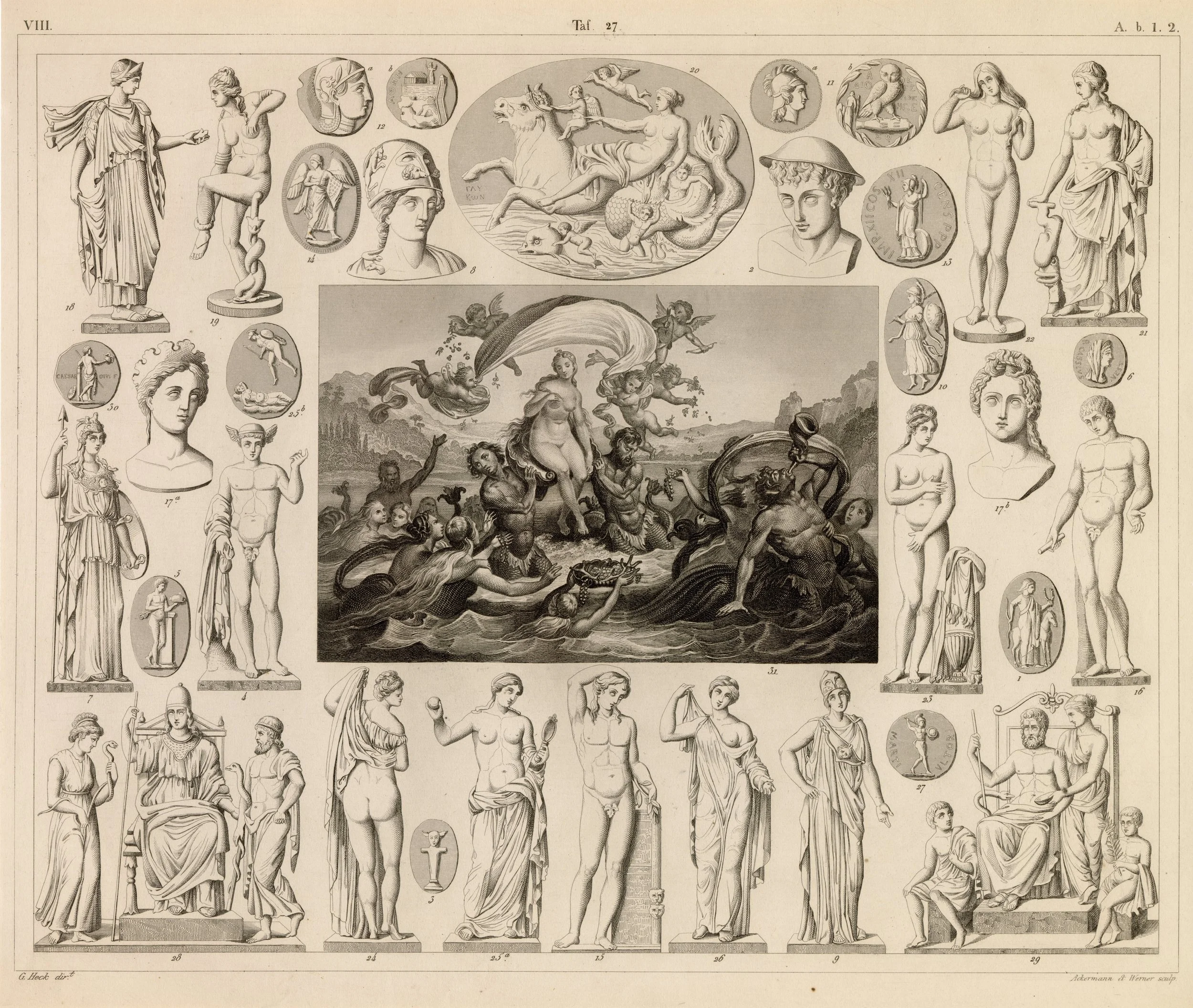
Reference plate depicting classical deities from Greek and Roman mythology, featuring, as the central scene, Venus emerging from the sea following Cronus’ usurpation of his father, (Uranus. Johann Georg Heck, Iconographic Encyclopædia of Science, Literature, and Art, Division IV: Mythology, plate 27. Steel engraving, 1851. )
1. Reality art
Your life is a piece of art. Anything and everything you do can be thought of as a means of expression to cultivate more love/magic/joy/weirdness into existence, or simply just into your inner being.
Your thoughts + words + actions have resonance, and when you intentionally express yourself, you are activating your own human experience into mythological formations.
2. Press record so we know it’s real
If a tree falls in the woods and no one sees it, did it happen? If you have a fabulous idea or experience and you don’t capture it—do we know about it? No, we don’t.
Record your most indelible moments, and share them with the world. Your words, your ideas, your experiences are materials to be molded into artful outputs.
3. Define YOUR ARCHETYPES
We contain multitudes, as Walt Whitman expressed in his 1855 poem, “Song of Myself.”
Carl Jung, the Tarot, Ancient Gods & Goddesses from Greece to India to Indigenous civilizations from all over the world have resonated within this similar concept: The different energies and expressions which make up our whole, make up our greater mythology.
Understanding your archetypes means that you understand the energies and expressions which come into your consciousness, throughout the different waves of time. Some days you may feel impassioned or emboldened by a specific spirit that makes you want to WAKE UP AND GET IT. Other times you may feel tender, thoughtful, or insular. Archetypes create definitions for these subtle pulsewaves: The Lover, The Warrior, The Alchemist, The Fool, The Wizard, The Wanderer.
Name your feelings, and give them light to be parts of your grand expression. The more you understand the various archetypes of your spiritual makeup, the more you are able to put those energies to work to manifest greatness.
4. Develop your themes
Once you understand the archetypes which drive you, you need to bolt down the core themes and impulses that have meaning to you/your mission.
What matters most to you? Name it. Themes could be anything—Love/War/Peace/Technology/Climate/Community/Space/Labor/Economics/History/Mystery... whatever you feel called to or inspired by.
Having a core list of themes that you commit yourself to will help you navigate the myriad ideas and inspirations you may be fielding and help you zone in on the throughlines which create your visionary output.
5. Say it without saying it
Part of mythology is about being to articulate meaning into the mythos, without needing to pontificate, pander, or proselytize to the current cultural expectations. You have to be able to say what you mean, but say it in a way that we haven’t fully heard before. Why haven’t we heard it before? Because it’s coming from YOU. And your challenge, mythological being, is to say it without saying it. Make it new/make it true/make it you. Reach beyond the atypical language that we’ve all been indoctrinated into. Go into the sensory field, and feel into the feelings which enable you to express that resonance.
A different dimension of this idea is that: We are living in the age of hypersurveillance, wherein you are likely to get flagged or shadowbanned if you type a “bad” word or express political/spiritual/sexual ideas into the feed. This means that you have to get creative with how you speak.
When expressing yourself in the age of technocracy—you literally have to find ways to SAY IT WITHOUT SAYING IT. Developing new words, codes, and linguistics to speak your truth without triggering censors. This creates opportunities to express yourself in transformative ways—beyond clichés, and beyond pre-scriptions (scripts prescribed by the tribe).
If you have something to say—SAY IT. BUT! You must find the way to do so without marking yourself, lest you get the mute. Transcend the expectations of a watchdog simulatrix. Develop a new language to express your deepest lore.
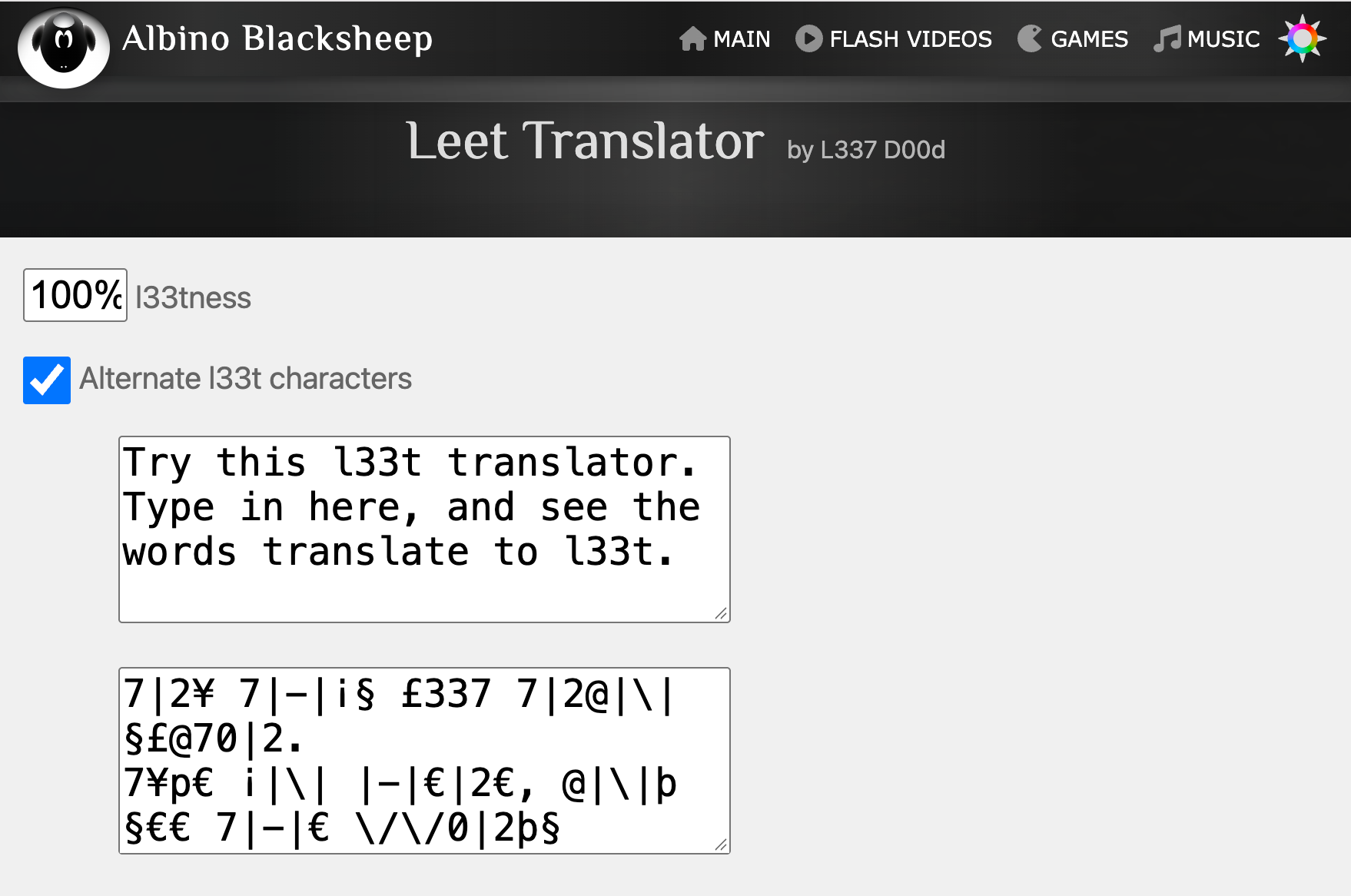
An online leet (or, as frequently stylized, “1337”) translator. Leetspeak, a form of Aesopian language and precursor to today’s “algospeak,” swaps letters for look-alike numerals and symbols. This convention originated within early online hacker forums as a means of bypassing imposed speech restrictions by sidestepping moderators and word filters while remaining legible to other community members. (L337 D00d, “Leet Translator,” Albino Blacksheep.)
6. Loreytelling
On that note, let’s talk about LORE, and how to deliver it. LOREYTELLING is the act of storytelling which builds out your personal experiences in ways which cultivate mystique, intrigue, or just straight-up aesthetic brutality.
You’ve developed your archetypes and your core themes—now you must determine the lore of it all, and how you’re going to shape stories about the concepts which hold deep meaning and resonance to your truth. Figure out how to best art-iculate the visual, metaphorical, and aesthetic language surrounding your lore. Is it literal? Is it figurative? Is it abstract? Is it linear? Victorious or tragic? Benevolent or evil? Maybe a little bit of it all? Figure it out, and learn how you would tell an avid audience around a Full Moon campfire about it all.
Your lore is based on what you know, but in order to make it felt, it is vital to develop the blueprint as to how you are enabled to erect these ideas into a captivating architecture for others to inhabit. Put your lore into a story, or a series of stories, and make it as epic, sprawling and masterful as you possibly can.
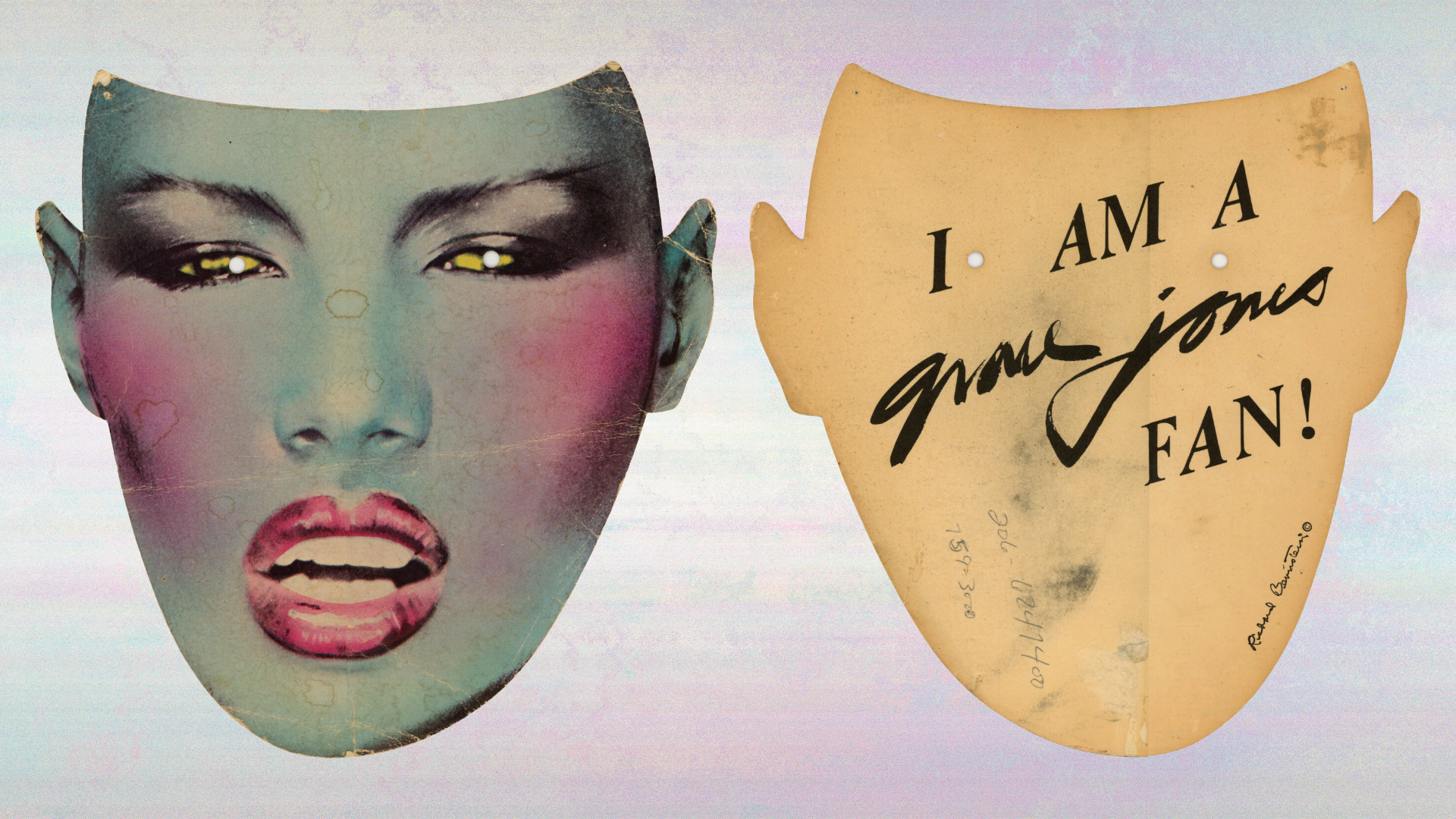
Grace Jones paper mask ephemera from Studio 54, designed by Richard Bernstein, c. 1980.
7. Articulation (the media is the message)
ARTiculation exists in a similar vein to Loreytelling: the artistic ways in which you say and display what you purvey.
The inquisitive media theorist and cultural prophet Marshall McLuhan proclaimed, “The Medium is the Message”—and what he meant by this is that, whichever medium you choose to execute your ideas/art is just as important as the message you are seeking to project.
ARTiculation involves you utilizing your words and your output with artistic effort embedded into the codex. It is, essentially, the blood in the heART of poetry. That which flows from thy soul, ejected and exported so others can know.
8. Develop the legenda
The legenda is the AGENDA OF LEGENDS.
Imagine your highest self, at the end of life, looking back at their time on this earth, and calibrating what was done with it. How were your days spent? How was your time prioritized? What mattered to you, and how did you mater-ialize that which matters into lived form?
Working backwards from the standpoint of your most legendary, highest self on their death bed is an incredible way to develop your LEGENDA.
Write down what’s meaningful—what your values and virtues are—and develop a current set of habits + challenges for your present self to adhere to. Put it into the calendar and fulfill your soul’s goals.
9. The output is the attractor
You cannot make traction in silence. You cannot command mythology without messaging. What you share is an act of care, and you must understand that what you output is an energetic force which will enable other likeminded people to find you/your work so that you can build your vision alongside others.
You may be sifting through many ideas and half-done projects, but it isn’t done until it is done, and you won’t be able to find your vibe tribe until you share it with the world. All this is to say—Finish that project! Send the email, reach out to the person you’ve been wanting to collaborate with, post something important to you to main, and let people know what you’re up to. Your output will attract that which is meant to find you, always.
10. Communicreation
The final phase of your self-mythologization manifestation is in COMMUNICREATION, A.K.A., the ways in which you communicate and create: How you interact with your community (the other people around you), and how you collectively choose to create, together and separately.
Communicreation involves the creative act of communication and community, bouncing off of one another, like bees in a hive or birds sharing information before migration. Contemplating the ways in which your creative efforts can be communicated to others and how others’ creative ways of communicating + art making inspire you, as well. Your mythology means nothing without the perception and introspection of the other people existing within your timeline. Push it out, and go all the way.
Signe Pierce / BIG SISTER is a contemporary, Los Angeles-based multimedia and performance artist. Pierce has exhibited her artwork worldwide, including at Los Angeles’ Museum of Contemporary Art, MoMA, the New Museum, Palais de Tokyo, Kunspalast, EIGEN+ART Lab, ANNA KULTYS GALLERY, and the 2018 Athens Biennial. Pierce collaborated on and starred in the critically-acclaimed reality short film American Reflexxx (dir. Alli Coates, 2015). Under alter ego BIG SISTER, Pierce also records and performs music, including several tracks with the late pioneering hyperpop producer SOPHIE.