Inside Los Angeles’ New Psychic Architecture
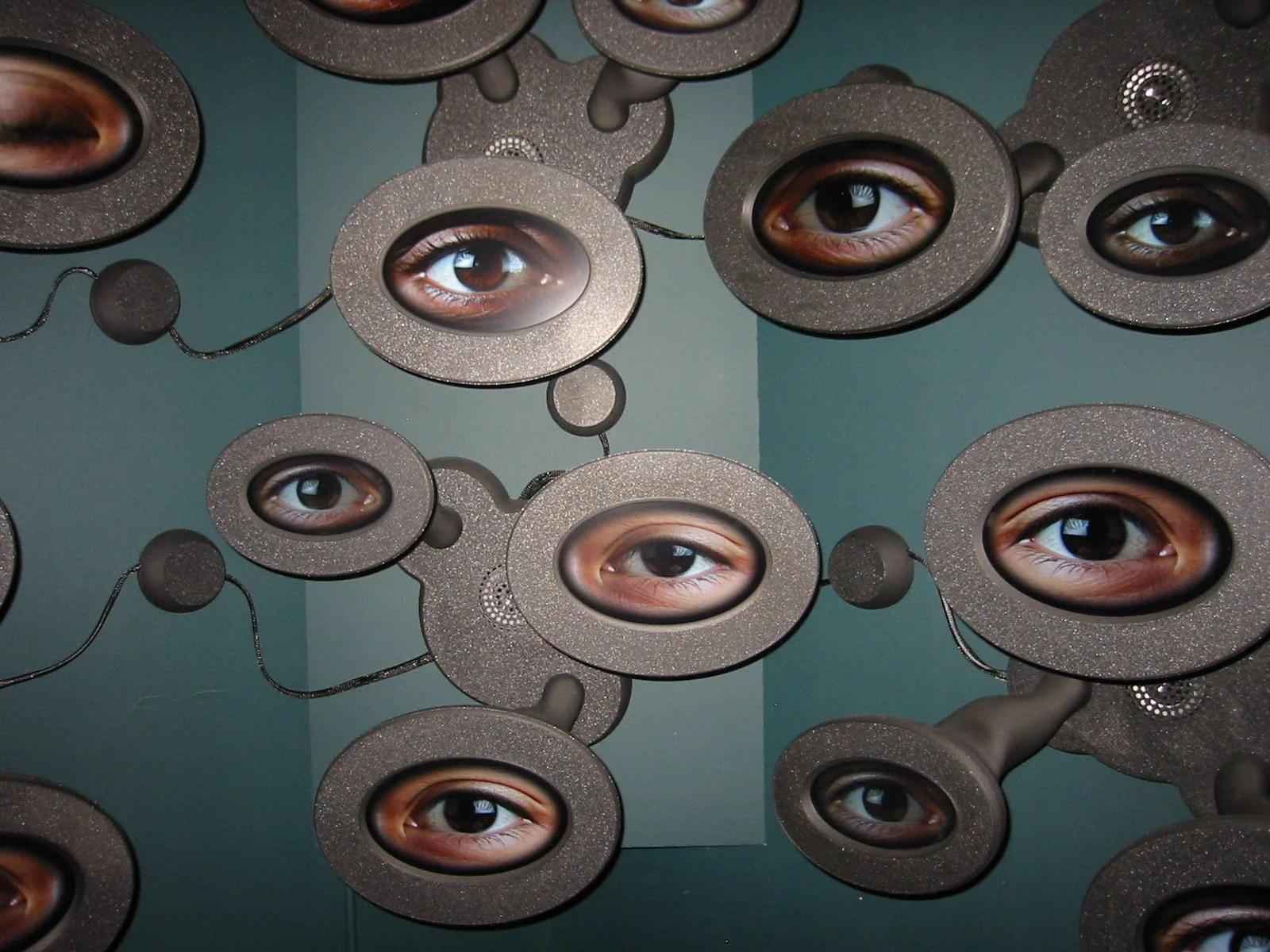
Ava Tichenor
Hospitals are, by virtue of their conceptual positioning, inherently laden with emotion.
In fact, the hospital is one of few public arenas in which overt expression of the most private, pure, personal feelings is not just institutionally permitted but even expected. Furthermore—before any art is installed, before the walls are repainted or the rooms reenvisioned—the hospital is a structure that not only allows the expression of emotion elsewhere veiled, it lends itself to the exhibition, spatial embodiment, and embedding of this emotion, both in the actual architecture of the space itself and, where it often looms even larger and longer, in the interior architectures of our memories and imaginations.
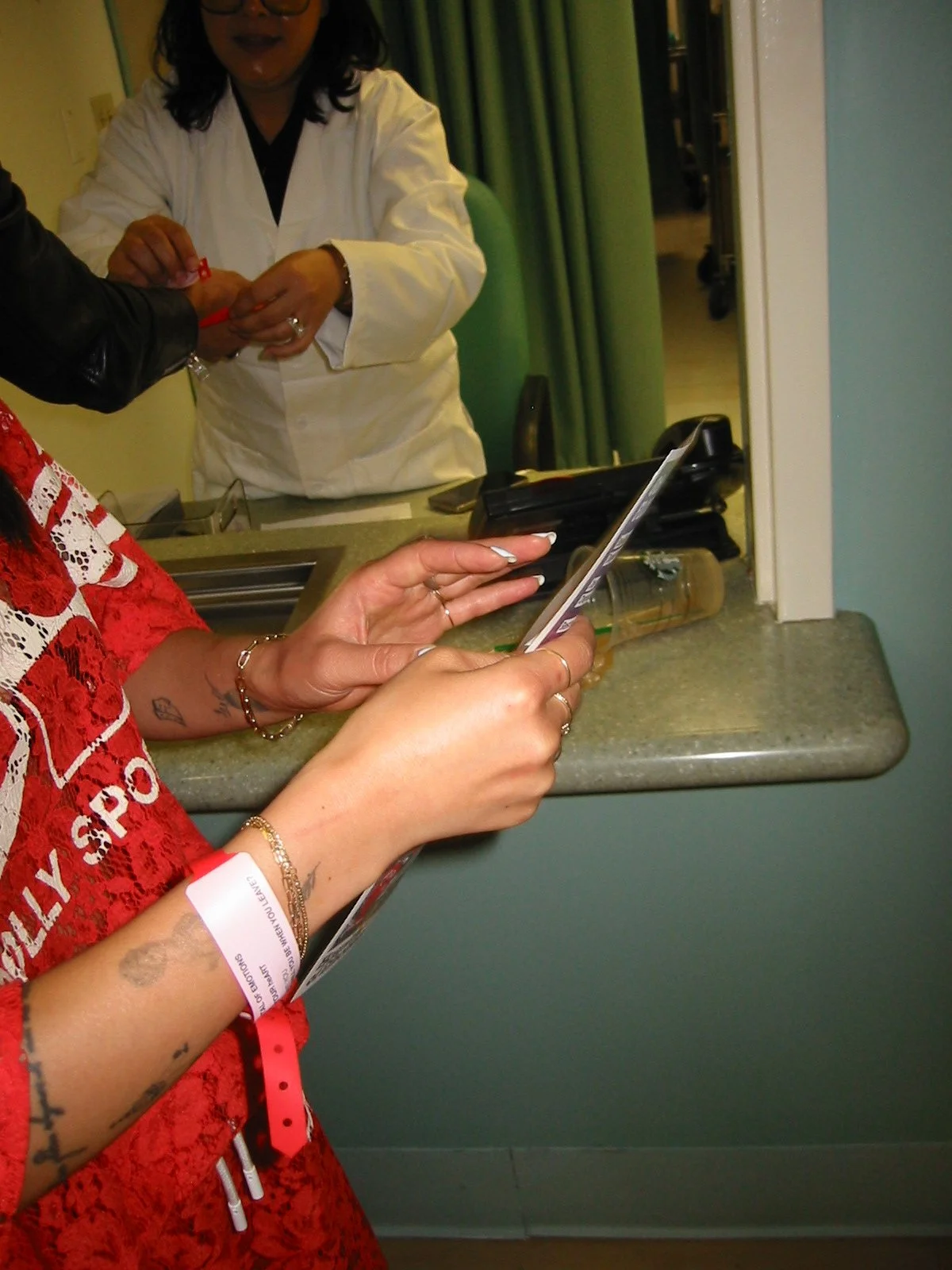
Fear is permitted there, palpable in the restless movements of bodies inhabited by apprehensive, insomniac minds. Grief swells to fill its rooms with this suffocating weight. Relief has its interstices in vacant hallways, fire escapes, stairwells, the occasional vending machine visit. Anticipation gathers in the tightly-packed furniture of waiting rooms. Hope peeks through the windows with the glimmer of sunlight, even while oppressive, fluorescent lighting inside overhangs with despair. The person, as the patient, is poked and prodded into data points on paper to be filed, processed, monitored, discharged. Family and visitors become set dressing, fading into the backdrop. Entrants ailing and otherwise are IDed, numbered, labeled with stickers and wristbands, and designated access areas and hours methodically.
Ava Tichenor
Ava Tichenor
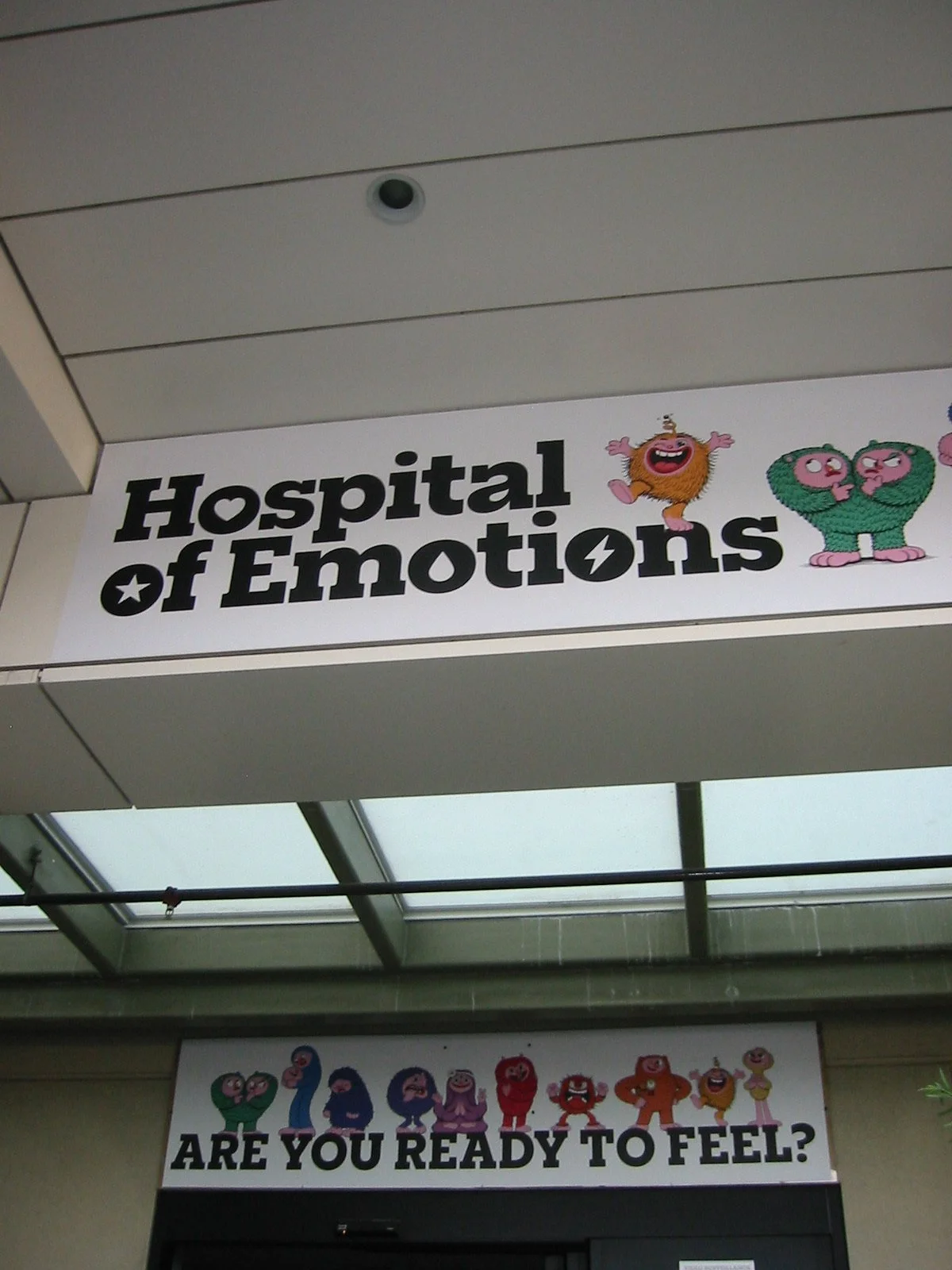
In person, Hospital of Emotions, the limited run pop-up immersive art exhibition staged inside a wing of Los Angeles’ erstwhile St. Vincent Medical Center, feels less like a novelty or photo op (although, rest assured, there are plenty of them) than a diagnosis. Or, rather, perhaps, a prescription.
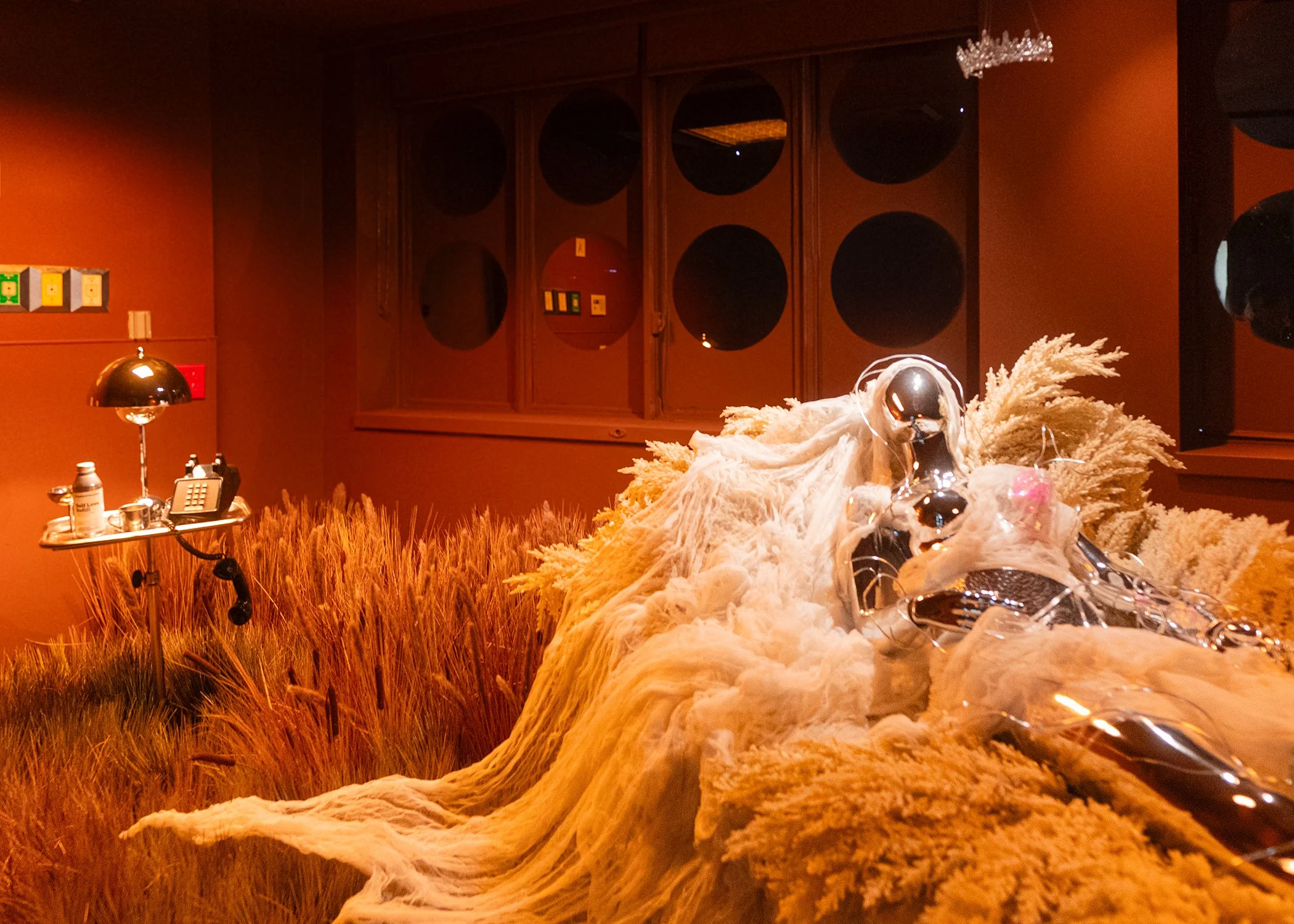
The project brings together 70 artists, designers, builders, and art directors whose work spans over 80 rooms and four floors of vacant hospital facilities. Still patently recognizable for their former functions, patient rooms, operating theaters, antiseptic and severely lit corridors, and sallow, Formica-topped nurses’ stations have been transformed into circumscribed microworlds of installations grouped—with an explicit taxonomy the premise hardly requires—into eight “Departments,” each representing its own distinct emotion. Starting at the top, the exhibition guides us downward through Joy, Love, Fear, Anger, Hope, Sadness, Gratitude, and Resilience as we wind our way back down to the ground floor.
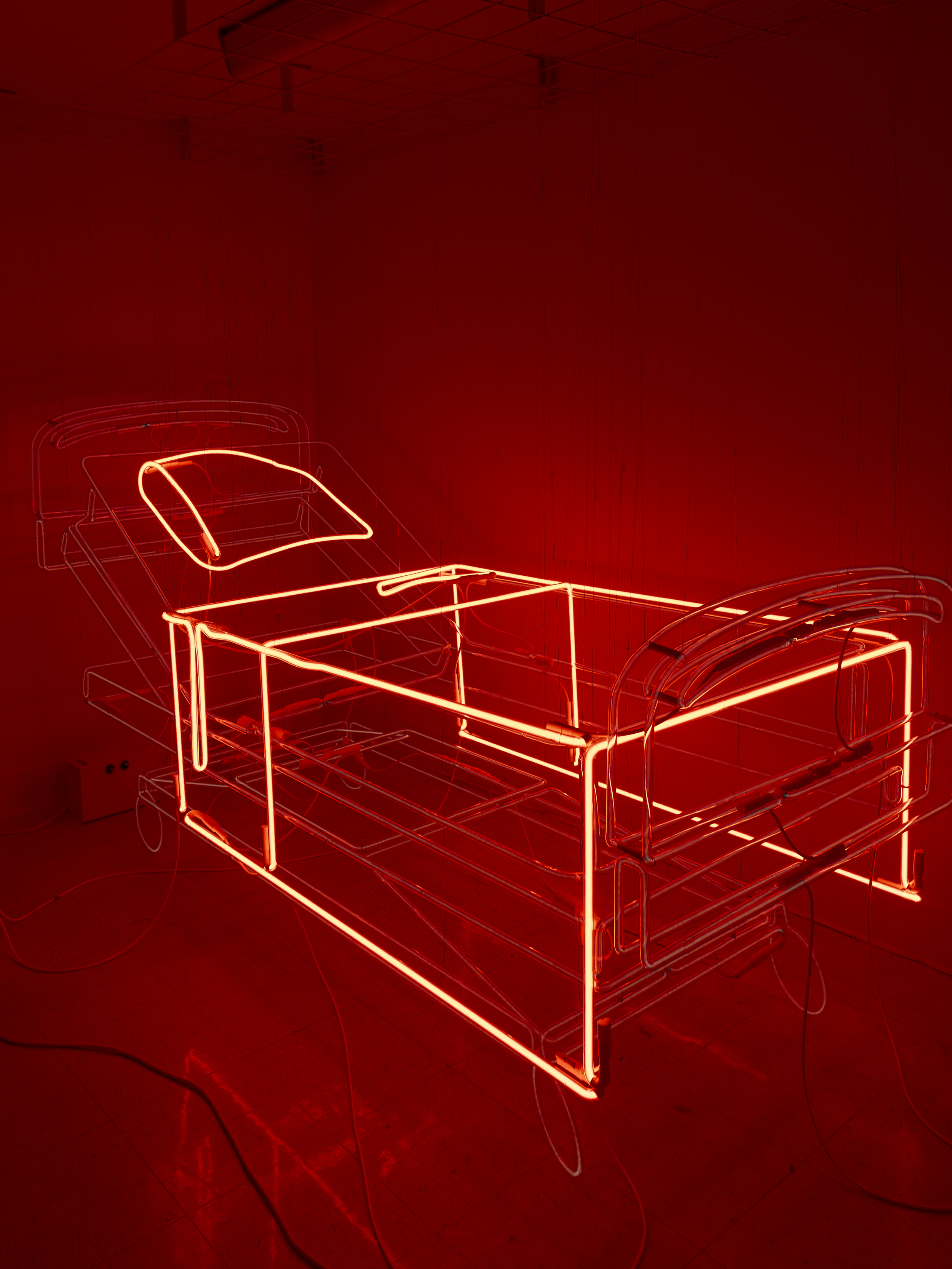
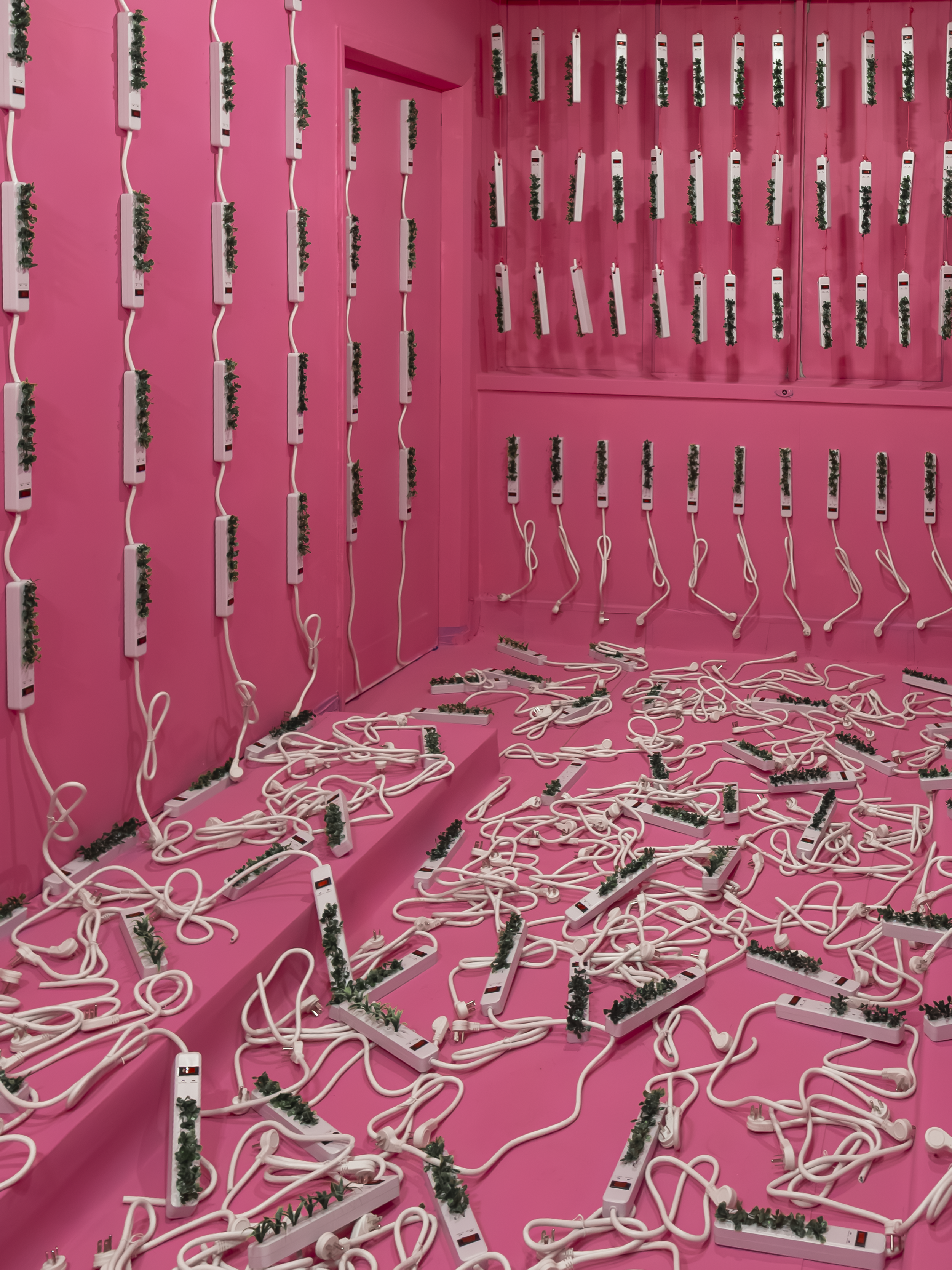
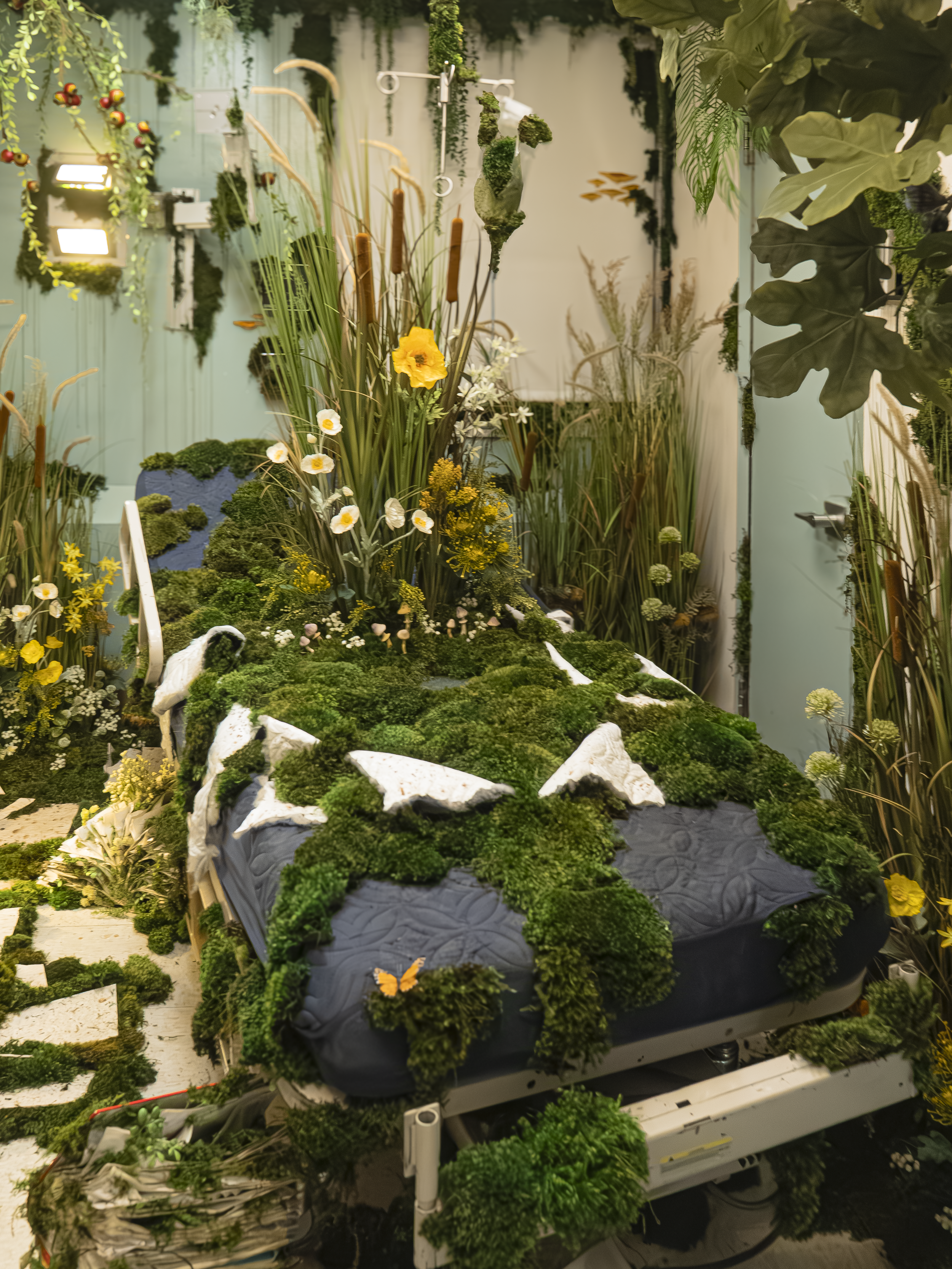
Photography by Ava Tichenor
There is no question that this is the latest, large-scale immersive experience—an endeavor growing increasingly popular—in a city already well-versed and long-steeped in spectacle. Los Angeles has long known how to transform a space into an alternate, imagined world. This city is not only is filled with fabricated, high-production-value sets, but often seems as if it is itself a kind of set.
The exhibition’s strength, though, lies neither in the novelty of its setting nor in the installation themselves (though there were a number of impressive installations), considered in isolation from their context. Rather, their collective juxtaposition—with one another and, maybe more importantly, with the hospital space as their venue—confronts visitors emphatically and unequivocally with materializations of the emotional scaffolding the building itself intrinsically, yet less conspicuously, already contains.
A hospital does not need to be analogized to vulnerability explicitly to evoke it. In many ways, the hospital, by function, nature, and experience, may actually be one of the clearest, commonly legible material constructions of vulnerability.
The exhibition marks a larger shift in cultural space: from the immersive to the affective. The question is no longer only, "What can a room show us?" It is, "What can a room make us feel — and what does it ask us to do with that feeling once we have it?"
For the last decade, “immersive” has been one of the most overworked words in culture. It has been used to describe everything from serious installation art to selfie rooms, brand activations, projection environments, experiential retail, dining concepts, wellness spaces, and temporary museums built around a single color, product, or mood. At its weakest, immersion became shorthand for decorative totality: a place where the walls, lights, props, and camera angles all conspired to make the visitor feel briefly inside something.
But the more current evolution is subtler. The new experience does not just surround the body. It tries to organize the emotional state of the person moving through it.
This is the emotional institution: a cultural space that borrows from the hospital, the museum, the theater, the wellness studio, the chapel, the school, and the content set. It gives feeling an architecture. It turns mood into a route. It creates rooms where emotion can be named, staged, photographed, witnessed, circulated, and uploaded to “memory” outside of our own.
In this sense, Hospital of Emotions is both artwork and symptom. It reflects a culture that increasingly wants feeling to be spatial, legible, and shareable. We want grief with lighting, joy with a threshold, fear with a warning sign. Hope with an exit path. We want emotional states that can be entered, visited, and eventually departed.
This is not necessarily shallow. In fact, part of the appeal of a project like this is that it acknowledges something real about contemporary life: people are emotionally oversaturated and structurally under-ritualized. The old containers for public feeling—religion, neighborhood, extended family, civic ritual, even the traditional museum—no longer hold the same authority for many people. At the same time, the internet has made feeling constant, performative, fragmented, and ambient. We are constantly being asked to react, but rarely given a room in which we can process how we ultimately do.
An exhibition built around emotion offers a kind of substitute structure. It says: enter here. Move through this. This room is for fear. This one is for joy. This one is for grief. This one is for whatever comes after grief.
The clinical setting sharpens the proposition. Hospitals are places where emotion is both unavoidable and procedural. They are filled with signs, numbers, wristbands, curtains, forms, thresholds, monitors, and waiting areas: all the ordinary systems by which the body is made administratively visible. To turn that setting into an art experience is to expose how much feeling is already shaped by infrastructure.
A room does not merely contain emotion. It instructs it.
Think of the difference between crying in a bedroom, crying in a waiting room, crying in a gallery, crying in a chapel, crying in a bathroom at a party, and crying in a former hospital room transformed by an artist into a symbolic environment. The feeling may be similar. The social permission around it is not. Architecture tells the body what kind of emotion it is allowed to have.
That is why the hospital is such a potent site for an immersive exhibition. It is one of the last public spaces where intense feeling is not automatically embarrassing. In most of contemporary culture, emotion has to be managed into taste: styled, captioned, aestheticized, made articulate. In a hospital, feeling can still be ugly, sudden, bodily, repetitive, unresolved. It can happen under bad lighting. It can happen before anyone is ready.
Hospital of Emotions sits at the intersection of those two regimes: raw feeling and designed feeling. The project takes a building associated with pain, care, crisis, recovery, and mortality, then reframes it through installation, image-making, and artistic interpretation. That tension is the point. The viewer is not only walking through art. They are walking through the residue of institutional care, transformed into a sequence of emotional propositions.
This is also why the experience feels distinctly Los Angeles.
L.A. has always been a city of emotional architecture. Its industries specialize in manufacturing atmospheres: cinema, television, music, hospitality, wellness, beauty, therapy, nightlife, real estate, branding, celebrity, spiritual practice. The city turns interiors into identities. It makes restaurants feel like scenes, stores feel like galleries, gyms feel like philosophies, hotels feel like lifestyles, and private homes feel like production stages. In L.A., the built environment is rarely neutral. It is always auditioning for a mood.
The former hospital near downtown becomes, in that context, an almost too-perfect object. It carries the seriousness of a civic institution, the eeriness of abandonment, the charge of bodily memory, and the spatial logic of a film set. It is not a white cube. It is not a warehouse pretending to be a dreamscape. It is a building with a prior emotional function.
That prior function matters. Without it, the premise risks becoming simple metaphor: emotions as rooms, rooms as content, content as experience. With it, the exhibition becomes stranger and more layered. The setting remembers what the art can only stage.
The visitor, meanwhile, occupies an unstable role. They are not quite a patient, not quite a viewer, not quite an audience member, not quite a participant. They move through the building as an emotional subject being cued by space. Each room asks them to recognize an affective category and decide how closely to approach it. The result is a kind of emotional choreography: enter, look, feel, photograph, move on.
That sequence is central to the contemporary experience economy. Designed spaces increasingly ask us to perform a feeling back to ourselves. The photo is not incidental; it is one of the ways the experience confirms that the feeling happened. Documentation becomes a second layer of embodiment. The room affects the visitor; the visitor produces an image; the image circulates as evidence of having been affected.
This does not make the feeling false. It makes the feeling social.
The more useful question is not whether immersive emotional spaces are authentic or artificial. They are obviously both. A staged room can produce a real response. A symbolic environment can give shape to something that was previously inarticulate. A photo taken inside an installation can be narcissistic, yes, but it can also be a way of making contact with an experience that might otherwise evaporate.
The risk is that emotion becomes too neatly packaged. By organizing feelings into grouped departments, assigned rooms, and “shareable” moments, their messier, uglier realities bear the risk of losing the realness, the roughness, the unpalatable darkness and interior complexity that makes their confrontation and processing simultaneously so challenging and so worthwhile, instead threatening to sanitize, label, and flatten them into aesthetic categories. The emotional institution offers containment, simplicity, and structure where subjectivity is inescapable and experience often resists cut-and-dry demarcation.
Today, cultural spaces increasingly function as training grounds for how we process collective life. Museums teach us how to look. Stores teach us how to desire. Even the spaces we occupy virtually, social platforms, teach us how to narrate the self. Immersive experiences, as they gain mainstream popularity, teach us how to feel.
The hospital, as a space, intensifies that lesson. It reminds us that emotion is never purely interior. It is mapped onto and shaped by rooms, systems, permissions, thresholds, costumes, lighting, language, and the people occupying the space alongside us. A diagnosis is a story told through an institution. So is an exhibition. So, increasingly, is a feeling.
What Hospital of Emotions reveals is not simply that L.A. likes immersive art, or that old buildings make good cultural backdrops, or that emotion is a compelling theme. It reveals a deeper appetite for spaces that can hold what daily life keeps dispersing. People do not only want to be entertained. They want to be organized. They want a path through the feeling. They want the room to tell them where to put it.
Maybe that is the most contemporary fantasy of all: not escape, not spectacle, not even catharsis, but emotional legibility. A place where the feeling has, where grief is not vague but instead located, where the body can walk into fear, then, at will, step back out again. A place where emotion, briefly, has an institution.